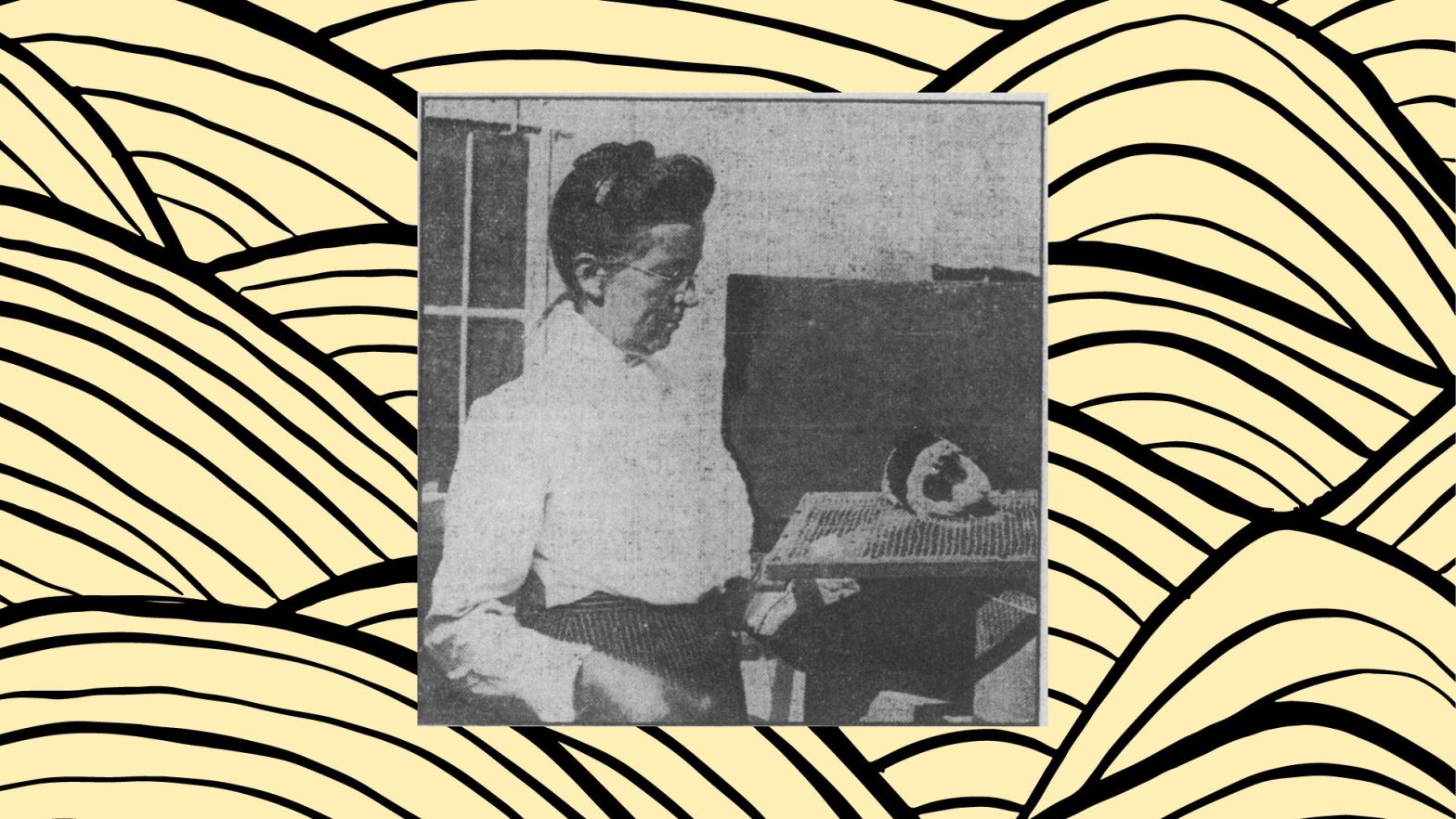
Abbie Lathrop, the “Mouse Woman of Granby”
Abbie Lathrop, a lesser-known yet pivotal figure in the history of genetic research and the domestication of laboratory mice, made significant contributions to the field of genetics and the development of the mouse as a key model organism. At the turn of the 20th century, Lathrop’s work laid the groundwork for the mice that are now integral to scientific research across various disciplines.
Early Life and The Granby Mouse Farm
In the early 1900s, Abbie Lathrop, a former school teacher and nurse, moved to Granby, Massachusetts, where she began breeding fancy mice as a hobby. Her venture quickly evolved into a scientific pursuit when she started to supply these mice to researchers. What made Lathrop’s mice particularly valuable was her meticulous observation of their traits and her efforts to breed them for specific characteristics, including coat colors, patterns, and behaviors.
Contributions to Genetic Research
Lathrop’s collaboration with scientists, most notably with William Ernest Castle and later with Clarence Cook Little, proved to be groundbreaking. Castle, a Harvard University geneticist, was among the first to recognize the potential of Lathrop’s mice for genetic studies. Together, they conducted experiments that contributed significantly to the understanding of Mendelian inheritance in mammals.
It was on Lathrop’s Granby farm that many genetic mutations and traits were first observed and cataloged. Her work facilitated the study of heredity and the emergence of the mouse as a premier model organism in genetic research. The controlled breeding and detailed record-keeping practiced by Lathrop provided a foundation for the development of inbred strains of mice, which are crucial for ensuring consistent results in genetic experiments.
Legacy and Impact
Abbie Lathrop’s contributions extend far beyond her lifetime. The mice from her Granby farm were foundational in the establishment of the Jackson Laboratory by Clarence Cook Little, who recognized the importance of genetically uniform mice for research. The Jackson Laboratory continues to be a leading center for genetic research, partly owing to the early contributions of Lathrop’s mice.
Abbie Lathrop’s work has had a lasting impact on biomedical research, genetics, and the development of treatments for human diseases. By providing mice with specific genetic traits, she helped pave the way for the use of mice in the study of cancer, genetics, developmental biology, and a host of other fields. Her dedication and foresight in breeding and observing these animals have made her an unsung hero in the scientific community.
Conclusion
While Abbie Lathrop may not be a household name, her contributions to the field of genetics and the domestication of laboratory mice have left an indelible mark on science. Her pioneering work in mouse breeding not only facilitated crucial genetic discoveries but also established the mouse as an essential model organism that continues to drive forward advancements in medical and genetic research today.
 MisterMiceGuy