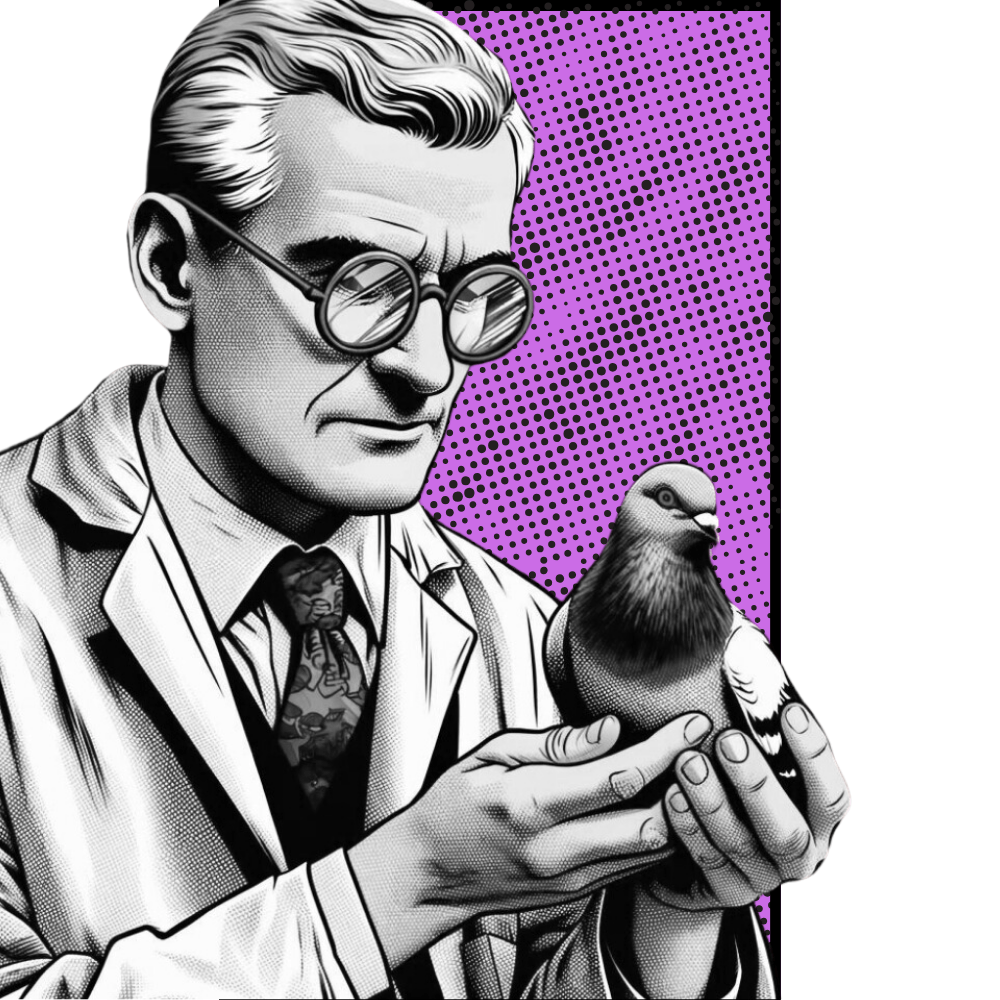
B.F. Skinner
B.F. Skinner, born Burrhus Frederic Skinner in 1904, was an influential American psychologist, author, inventor, and social philosopher. Known for his work in developing the theory of behaviorism and for his novel research methods, Skinner’s contributions to psychology have shaped the way we understand learning, behavior, and education.
Early Life and Education
Skinner was born in Susquehanna, Pennsylvania. He earned his BA in English from Hamilton College in New York. Initially aspiring to be a writer, Skinner later developed an interest in psychology. He went on to earn his MA and PhD in psychology from Harvard University, where he would spend much of his career.
Pioneering Research
Skinner’s research focused on understanding and explaining observable behavior, rather than delving into the mind’s internal processes. He developed the concept of operant conditioning, using devices known as Skinner boxes to conduct experiments on rats and pigeons. These experiments demonstrated how animals learn to exhibit certain behaviors through reinforcements and punishments, a process Skinner argued could be applied to understand human behavior.
Radical Behaviorism
Skinner’s philosophical stance, known as radical behaviorism, extended the concept of behaviorism to include internal processes, such as thoughts and feelings, but always in terms of observable behavior. Unlike other forms of behaviorism, Skinner’s approach acknowledged these internal states without treating them as separate from external behaviors. Radical behaviorism posits that all human behavior is shaped by environmental factors and the consequences of actions, challenging notions of free will and introspection.
Operant Conditioning
Operant conditioning, a cornerstone of Skinner’s research, is a method of learning that employs rewards and punishments for behavior. It suggests that behaviors followed by positive outcomes are more likely to recur, while those followed by negative outcomes are less likely. Skinner identified different types of reinforcements and schedules that affect the rate and strength of learned behaviors, significantly influencing educational practices, therapy, and behavior modification programs.
Impact on Cognitive Behavioral Psychology
Skinner’s discoveries and perspectives have profoundly impacted cognitive behavioral psychology by emphasizing the role of environmental stimuli and consequences in shaping behavior. His work laid the groundwork for the development of behavioral therapies, which are used to treat a wide range of psychological disorders by changing harmful behaviors into positive ones. Skinner’s emphasis on empirical research and observable outcomes has also influenced educational strategies, leading to more effective teaching methods that cater to individual learning processes.
In conclusion, B.F. Skinner’s pioneering work in behaviorism has left a lasting legacy in psychology. His concepts of radical behaviorism and operant conditioning have provided valuable insights into human behavior, influencing educational practices, therapeutic approaches, and our general understanding of how behaviors are learned and modified. Skinner’s work underscores the significance of the environment in shaping behavior, offering a powerful lens through which to view and influence human action.
 MisterMiceGuy