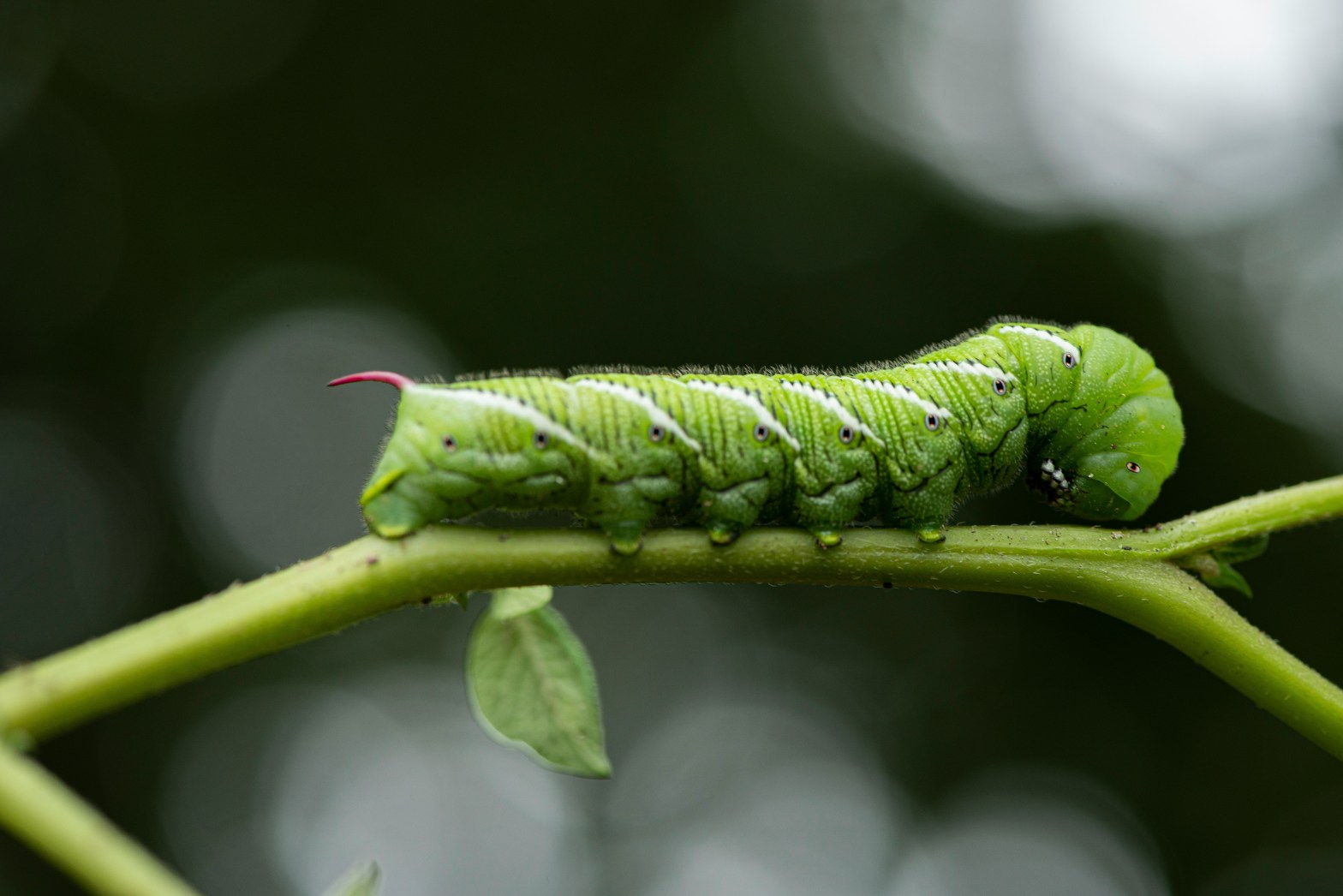
Manduca worms, encompassing species such as Manduca sexta and Manduca quinquemaculata, represent an intriguing subject of study in both the psychological and biological sciences. Manduca sexta, commonly known as the tobacco hornworm, undergoes a vibrant life cycle starting from translucent green spherical eggs to bright green larvae, adorned with a characteristic horn, earning them the “hornworm” moniker. These caterpillars feed on plants from the Solanaceae family, like tobacco and tomatoes, exhibiting a remarkable transformation through five larval stages before pupating and eventually emerging as nectar-feeding moths with a wingspan of approximately 100 mm. This species is not only a focal point in agricultural studies due to its pest status but also serves as a model organism in scientific research, offering insights into insect physiology and behavior.
Manduca quinquemaculata, or the tomato hornworm, shares a similar life trajectory, marked by its significant impact on agriculture as a pest. These large green caterpillars distinguish themselves through distinct white V-shaped markings and a preference for tomatoes as their primary food source. Like their relatives, they pupate and transform into the five-spotted hawkmoth, illustrating a unique cycle of growth and metamorphosis that bridges the gap between biology and psychology, particularly in the context of understanding behavior and development within natural settings.
The genus Manduca showcases a rich diversity, with numerous species like Manduca sexta and Manduca quinquemaculata playing pivotal roles not only in ecosystems as pollinators and pests but also in scientific research as model organisms. This interplay highlights the blurred lines between disciplines, demonstrating how the study of organisms such as the Manduca worms can illuminate broader biological principles and psychological phenomena.
 MisterMiceGuy