
The Blank Slate
The Noble Savage

The Ghost in the Machine

Clark Hull & Drive Reduction Theory

Clark Hull: A Pioneer of Drive Reduction Theory in Psychology
General Background
Clark Leonard Hull (1884–1952) was an influential American psychologist known for his work in the realm of learning and motivation. Hull’s academic journey began with an interest in engineering, but after a bout of polio, he redirected his focus towards psychology. He earned his Ph.D. from the University of Wisconsin and later joined the faculty at Yale University, where he spent much of his career. Hull’s systematic and empirical approach to psychology helped lay the groundwork for behaviorism’s dominance in the early to mid-20th century.
Hull’s Research
Hull’s research focused primarily on learning, motivation, and behavior. He sought to explain behavior through a series of formal, mathematical postulates and hypotheses, aiming for a theory that could predict behavior in any situation. Hull’s dedication to a rigorous, scientific approach to psychology led to significant advancements in the study of habit formation, the effects of reinforcement, and the mechanics of learning.
Drive Reduction Theory
One of Hull’s most notable contributions to psychology is the Drive Reduction Theory. This theory posits that behavior is a result of biological needs that produce drives, or states of tension. According to Hull, learning occurs when actions lead to drive reduction, thus reinforcing the behavior. For example, if hunger (a drive) leads an organism to find food (behavior), the reduction in hunger reinforces the behavior, making it more likely to occur in the future. Hull’s theory was one of the first to integrate concepts of motivation with learning and behavior, suggesting that drives are primary motivators for all behaviors.
Importance to Cognitive Behavioral Psychology
While Clark Hull’s work predates the development of cognitive behavioral psychology, his emphasis on empirical evidence and the systematic study of behavior had a lasting impact on the field. Hull’s drive reduction theory contributed to the understanding of how motivation and reinforcement affect learning and behavior, concepts that are integral to cognitive behavioral perspectives. His work laid the groundwork for later theories of motivation and learning by establishing a foundation for understanding the relationship between needs, drives, and behavior.
Hull’s legacy in psychology is marked by his rigorous scientific methodology and his contributions to our understanding of motivation and learning. His drive reduction theory, despite criticism and evolution over the years, remains a cornerstone in the study of behavior and has influenced subsequent theories and models in psychology. Hull’s work exemplifies the importance of systematic, empirical study in uncovering the complexities of human and animal behavior, continuing to inform and inspire psychologists across various subfields.
William James & Functionalism

William James: A Pillar of Modern Psychology
General Background
William James (1842–1910) was an American psychologist and philosopher who played a pivotal role in the establishment of psychology as a scientific discipline in the United States. Born into a wealthy and intellectual family, James initially studied medicine at Harvard University but was drawn to the complexities of human consciousness and behavior. His work laid the foundation for many future psychological theories and practices, and he is often celebrated as the “Father of American Psychology.”
James’s Research
Throughout his career, James conducted extensive research on the human mind, focusing on how individuals perceive, think, and behave. His most notable work, “The Principles of Psychology” (1890), is a comprehensive text that explores a wide range of psychological phenomena, from consciousness and perception to emotion and habit. James’s approach was characterized by his refusal to accept simplistic explanations for complex mental processes, and he emphasized the importance of studying the adaptive functions of consciousness.
Functionalism
James is credited with founding the school of Functionalism, a branch of psychology that emphasized the role of mental processes in enabling individuals to adapt to their environment. Unlike structuralism, which sought to break down mental processes into their simplest elements, functionalism focused on the purpose of consciousness and behavior. James argued that mental activities, like thinking and feeling, evolved because they were useful for survival. This perspective was revolutionary and laid the groundwork for future psychological theories that examined the function of mental processes in human life.
Radical Empiricism
In addition to his contributions to psychology, James developed a philosophical perspective known as “Radical Empiricism.” This theory posits that reality consists of both the objects of perception and the relationships between them, which are directly experienced. James argued that conventional empiricism, which emphasized isolated sensory experiences, failed to account for the rich, interconnected nature of human experience. Radical empiricism sought to bridge this gap by asserting that relations and connections are just as real as the sensory data we perceive.
Importance to Cognitive Behavioral Psychology
While William James did not directly contribute to the development of cognitive behavioral psychology, his ideas have had a lasting impact on the field. His emphasis on the adaptive functions of mental processes resonated with later psychologists who focused on how thoughts and behaviors affect an individual’s ability to cope with the environment. James’s work on habit formation, the stream of consciousness, and the psychological basis of emotion provided foundational insights that informed later research in cognitive and behavioral psychology. His belief in the practical application of psychology to improve human well-being is a principle that continues to guide the field today.
William James’s legacy in psychology and philosophy is profound. His innovative thinking about the human mind and his commitment to understanding the complexity of human experience have made him one of the most influential figures in the history of psychology. His work continues to inspire researchers and practitioners alike, underscoring the importance of a holistic, functional understanding of the human mind.
Martin Seligman & Learned Helplessness

Martin E.P. Seligman, an influential American psychologist, has significantly shaped modern psychology with his research and theories. Born on August 12, 1942, Seligman’s career spans several decades, during which he has contributed to the fields of cognitive behavioral psychology, positive psychology, and the study of well-being. A former president of the American Psychological Association (APA), Seligman’s work has propelled a shift in focus from pathology to enhancing the quality of life.
Seligman’s Research
Seligman’s early research centered on conditions under which animals and humans learn that their actions have no impact on their environment, a phenomenon he termed “learned helplessness.” This work provided a foundation for understanding certain types of depression and how people perceive their control over negative or positive outcomes in their lives. His research extended into various aspects of human behavior and mental health, including optimism, pessimism, and resilience.
Learned Helplessness
The concept of learned helplessness emerged from Seligman’s experiments with dogs in the late 1960s. He found that animals exposed to inescapable electric shocks later failed to attempt escaping shocks even when it was possible to do so, having learned that they were helpless in affecting outcomes. This paradigm was extended to humans, showing how perceived lack of control can lead to passivity, cognitive fatigue, and depression. Learned helplessness has profound implications for understanding depression and has influenced treatments that aim to enhance perceived control over one’s environment and outcomes.
Positive Psychology
In the late 1990s, Seligman helped to found the field of positive psychology, a significant redirection in psychology’s focus towards understanding and building human strengths, virtues, and happiness. Positive psychology emphasizes the study of positive emotions, experiences, and traits, such as joy, gratitude, altruism, and resilience. This approach seeks to understand what makes life worth living and how individuals and communities can thrive. Seligman’s work in this area, including his development of the PERMA model (Positive Emotion, Engagement, Relationships, Meaning, and Accomplishment), has offered valuable insights into fostering well-being and happiness.
Impact on Cognitive Behavioral Psychology
While distinct from cognitive-behavioral therapy (CBT), Seligman’s contributions have deeply influenced cognitive behavioral psychology by emphasizing the role of cognitive processes in depression (through learned helplessness) and well-being (via positive psychology). His research has shown how altering one’s perception of control and focusing on positive aspects of life can significantly affect mental health outcomes. These insights have informed therapeutic approaches that aim to modify negative thought patterns and enhance positive experiences and relationships, thus improving psychological resilience and well-being.
Conclusion
Martin Seligman’s legacy in psychology is vast, spanning from the intricate mechanisms of learned helplessness to the expansive, optimistic vistas of positive psychology. His work has not only deepened our understanding of human suffering and resilience but has also opened new pathways for exploring what it means to live a fulfilling life. As a pioneering figure in shifting psychology’s focus towards the positive, Seligman’s influence will continue to resonate in the study and practice of psychology for years to come.
Robert Rescorla & the Rescorla-Wagner model

Robert A. Rescorla was a renowned American psychologist who made significant contributions to the field of psychology through his extensive research on associative learning in animals. Born in 1940, Rescorla’s work has been pivotal in shaping our understanding of how creatures, including humans, learn about the world around them through experiences. His research has laid the groundwork for numerous advancements in both psychology and neuroscience, illuminating the intricate processes underlying learning and behavior.
Research Contributions
Rescorla’s research primarily focused on classical conditioning, a fundamental principle of learning first discovered by Ivan Pavlov. Unlike Pavlov, who emphasized the temporal association between stimuli, Rescorla explored the importance of contingency—a concept that underscores the predictability and relationship between a conditioned stimulus (CS) and an unconditioned stimulus (US). His innovative experiments, notably involving dogs and rats, demonstrated that the strength of the conditioned response depends significantly on the CS’s ability to predict the US, thereby transforming the understanding of how associations are formed and stored in the brain.
The Rescorla-Wagner Model
Alongside mathematician Richard Wagner, Rescorla developed the Rescorla-Wagner model in 1972, a groundbreaking theoretical framework for understanding classical conditioning. This model proposed that the learning process involves a change in the strength of association between the CS and the US, which is determined by the surprise or unexpectedness of the US. According to the model, maximal learning occurs when the US is unexpected, whereas no learning occurs if the US is fully predicted. The Rescorla-Wagner model quantitatively predicts the conditions under which associative learning and unlearning (extinction) will occur, offering a mathematical basis for understanding the dynamics of conditioning.
Impact on Cognitive Behavioral Psychology
Rescorla’s discoveries and theoretical models have had a profound impact on cognitive behavioral psychology by elucidating the mechanisms of learning and behavior modification. His emphasis on the importance of contingency and prediction in learning processes has helped scientists and psychologists to better understand how behaviors can be shaped, maintained, or extinguished through the manipulation of environmental stimuli. Although his work is distinct from cognitive-behavioral therapy (CBT) practices, the principles underlying the Rescorla-Wagner model have informed various approaches in behavior therapy and educational strategies, contributing to more effective interventions for behavior change.
Conclusion
Robert Rescorla’s contributions to psychology have been instrumental in advancing our comprehension of the complexities of learning and conditioning. Through his innovative research and the development of the Rescorla-Wagner model, he has provided a robust framework for understanding how associations are formed in the brain, influencing numerous fields within psychology. His work underscores the significance of prediction and contingency in learning, offering invaluable insights that continue to influence cognitive and behavioral psychology today.
Harry Harlow & Attachment Theory
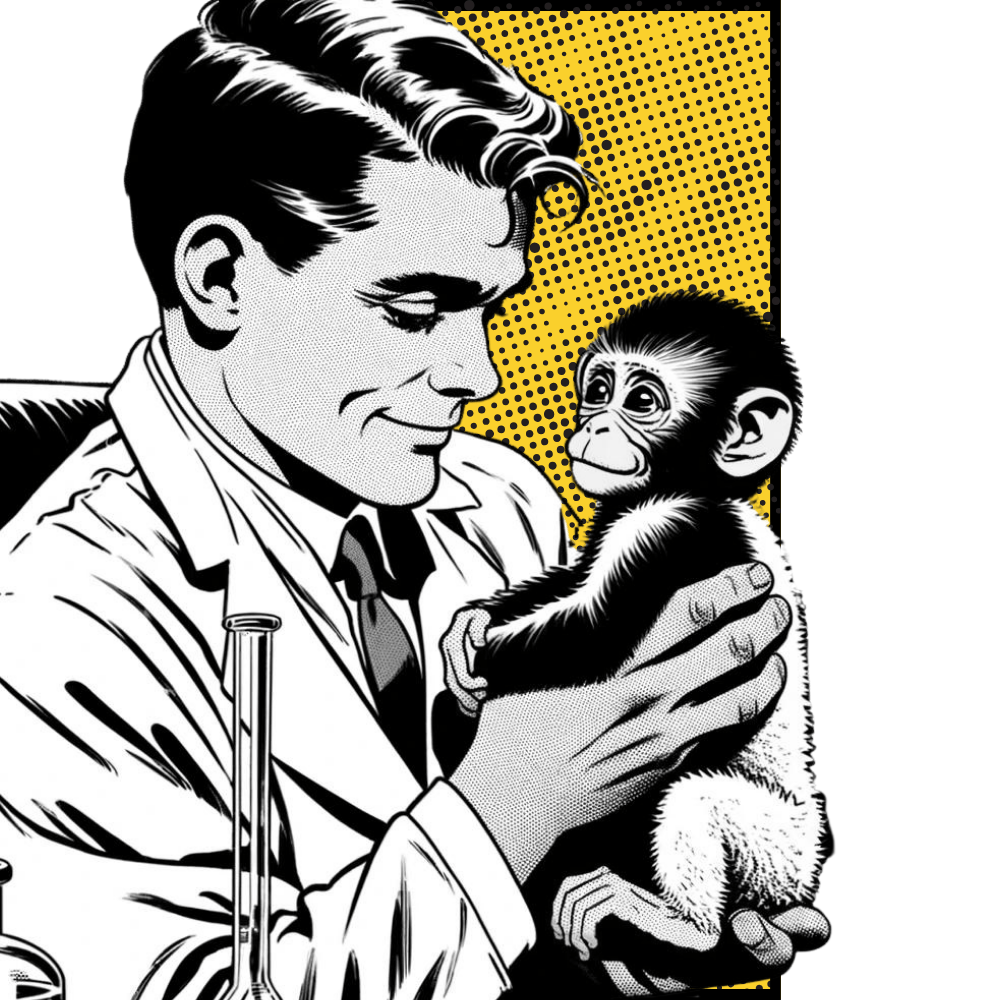
Harry Harlow, born on October 31, 1905, in Fairfield, Iowa, was a pioneering American psychologist whose work fundamentally altered our understanding of attachment, love, and social development. After receiving his Ph.D. from Stanford University, Harlow joined the faculty at the University of Wisconsin-Madison, where he spent most of his career studying the nature of relationships and emotional development among rhesus monkeys. His innovative approaches and thought-provoking findings continue to influence psychology, education, and parenting practices today.
Research
Harlow’s research in the mid-20th century challenged the then-prevailing theories that attachment was primarily based on the fulfillment of basic needs, such as hunger. In his most famous set of experiments, Harlow presented young monkeys with two surrogate mothers: one made of wire that provided food and another covered in soft cloth that offered no food. Contrary to expectations, the monkeys showed a strong preference for the comforting cloth surrogate over the nourishing wire surrogate, highlighting the importance of comfort, security, and warmth in the development of attachment.
Attachment Theory
The implications of Harlow’s research were profound, contributing significantly to the development of Attachment Theory. While John Bowlby is credited with formally developing Attachment Theory, Harlow’s work provided compelling empirical evidence supporting Bowlby’s ideas. Attachment Theory posits that the bonds formed between infants and their primary caregivers are crucial for survival and influence emotional and social development throughout life. Harlow’s findings underscored the importance of emotional and physical comfort in forming these bonds, challenging the notion that attachment was driven solely by biological needs.
Importance to Cognitive Behavioral Psychology
Harlow’s discoveries have had a lasting impact on cognitive behavioral psychology by emphasizing the critical role of early emotional experiences in shaping behavior and cognition. His work helped shift the focus toward understanding the psychological underpinnings of social and emotional development, influencing therapeutic approaches, child-rearing practices, and educational strategies. By demonstrating the profound effects of love, security, and early relationships on behavioral outcomes, Harlow’s research paved the way for integrating emotional and cognitive aspects into the behavioral sciences, enriching our understanding of human and animal psychology alike.
In conclusion, Harry Harlow’s pioneering experiments not only challenged existing paradigms but also laid the groundwork for future research in attachment, emotional well-being, and cognitive behavioral psychology. His legacy is a testament to the importance of warmth, affection, and secure relationships in the healthy development of individuals, insights that continue to inform and inspire across disciplines.
John Garcia & The Garcia Effect

John Garcia was a groundbreaking figure in the field of psychology, whose research fundamentally altered our understanding of learning and behavior. Garcia’s work spanned several decades, beginning in the mid-20th century, and he is best known for challenging prevailing notions about how animals (including humans) learn to associate stimuli with certain outcomes.
Background
John Garcia’s journey into psychology was marked by curiosity and a willingness to explore uncharted territories. With a career that started amidst the backdrop of behaviorism’s dominance in psychological research, Garcia ventured into areas that many of his contemporaries overlooked. His academic path led him to uncover phenomena that would question the universality of conditioning theories proposed by earlier psychologists.
Research
Garcia’s research was innovative and often counterintuitive. He was deeply involved in studying the effects of radiation on biological systems, which led him to explore the associations formed between taste and illness. Garcia observed that rats readily associated sickness with taste, but not with visual or auditory cues, suggesting a selective association mechanism at play. This finding was at odds with the then-dominant behaviorist view that any stimulus could be associated with any response, given the right conditioning.
The Garcia Effect
The “Garcia Effect,” also known as conditioned taste aversion, is perhaps what John Garcia is most renowned for. This phenomenon describes how animals (and humans) can develop an aversion to a taste if they experience nausea or sickness after consuming a particular substance. Remarkably, this aversion can form after just one instance, and the time between the taste and the subsequent illness can be several hours, challenging the traditional conditioning requirement of a close temporal association between stimulus and response.
Importance to Cognitive Behavioral Psychology
Garcia’s discoveries were pivotal for several reasons. Firstly, they demonstrated that biological predispositions play a crucial role in learning processes, suggesting that not all stimuli are equal in the eyes of the brain. This insight bridged a gap between biological and psychological perspectives, highlighting the importance of evolutionary history in shaping behavior.
Moreover, Garcia’s work underscored the complexity of cognitive processes, moving beyond the simple stimulus-response relationships posited by classical behaviorism. By showing that animals have an innate ability to make certain associations more readily than others, Garcia’s research paved the way for a more nuanced understanding of how cognitive factors influence learning and behavior.
In summary, John Garcia’s contributions to psychology were profound, challenging existing paradigms and opening new avenues for research in cognitive behavioral psychology. His work not only expanded our understanding of learning mechanisms but also highlighted the intricate interplay between biology, cognition, and environment in shaping behavior.
 MisterMiceGuy